If your chicken breasts aren't already pounded, cut them into 3 pieces and pound each to a uniform 1/2-inch thickness between plastic wrap using a meat mallet—this ensures even cooking. While the chicken rests, combine the flour, finely grated parmesan, salt, and black pepper in a shallow bowl. This dry mixture is your coating, and I like to make it ahead so I can work quickly once the pan is hot.
Heat the olive oil and 1 tbsp butter in a large skillet over medium-high heat until the butter is foaming and the oil shimmers. Working with one piece at a time, dredge the chicken in the dry mixture from Step 1, shaking off excess, then place it in the hot pan. Sear for 3-4 minutes on the first side until golden brown, then flip and cook for just 1 minute on the second side. Transfer the cooked chicken to a clean plate—the residual heat will continue cooking it gently while you build the sauce.
Wipe out the skillet with a paper towel to remove any browned bits (this prevents burning), then pour in the dry white wine over medium-high heat. Let it simmer vigorously for 3 minutes, reducing by about half—this concentrates the wine's flavor and burns off the alcohol. Add the lemon juice and cook for 1 minute, then reduce the heat to low. Cut the 2.5 tbsp unsalted butter into small cubes and whisk them in one at a time, creating a silky, emulsified sauce. I find adding the butter gradually over low heat prevents the sauce from breaking and gives it a beautiful, glossy finish.
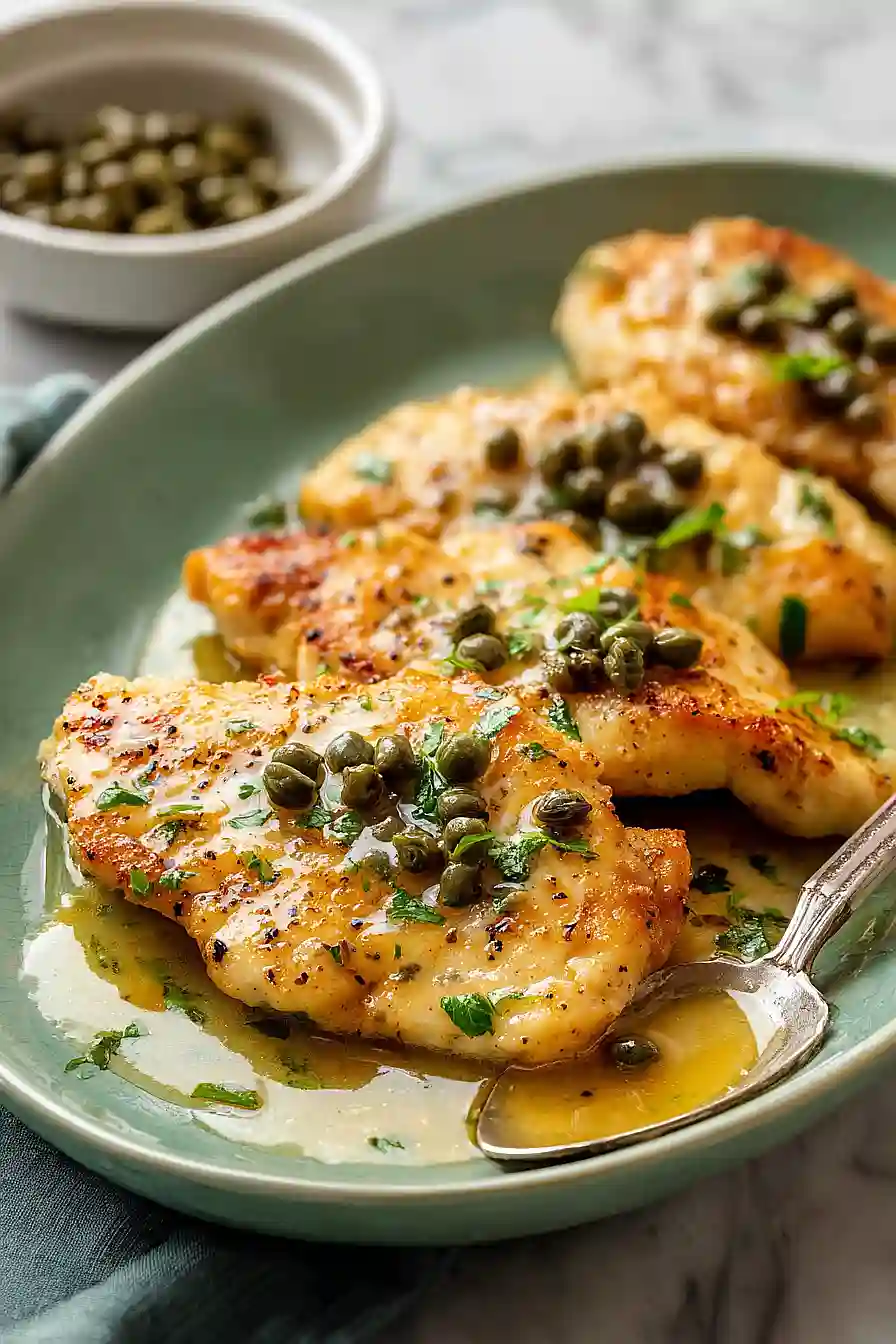
Stir the drained capers, minced garlic, red pepper flakes, and chopped parsley into the sauce from Step 3 and warm through for just 30 seconds—this adds brightness and pops of flavor without letting the parsley lose its color. Place the seared chicken from Step 2 on a serving plate and pour the sauce generously over top. Serve immediately while everything is warm.